Eagle Mountain, UT
Polyjacking in Eagle Mountain, Utah
Polyurethane foam lifting allows for raising a sunken slab in just a few minutes, curing nearly at that speed, and providing access holes approximately the diameter of a dime. In situations where both rapid turnaround time and an attractive appearance are important factors, polyjacking has become the preferred contemporary method to rectify settled concrete.
What Is Polyjacking?
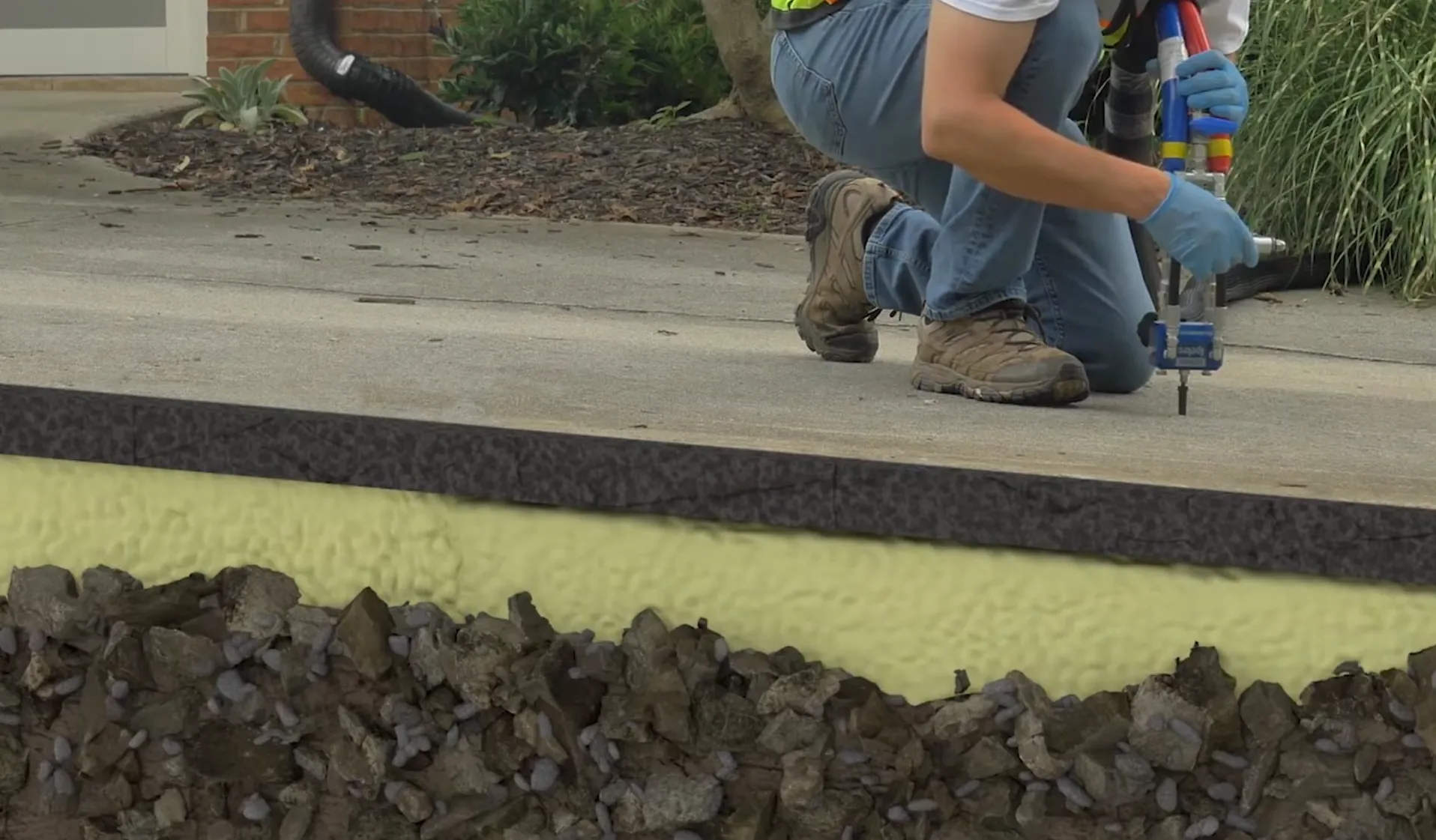
Polyjacking (also referred to as foam lifting) uses an expanding polyurethane foam (two parts) injected under a set slab. The foam expands into the void located below the slab creating the necessary force to elevate the slab to its original position.
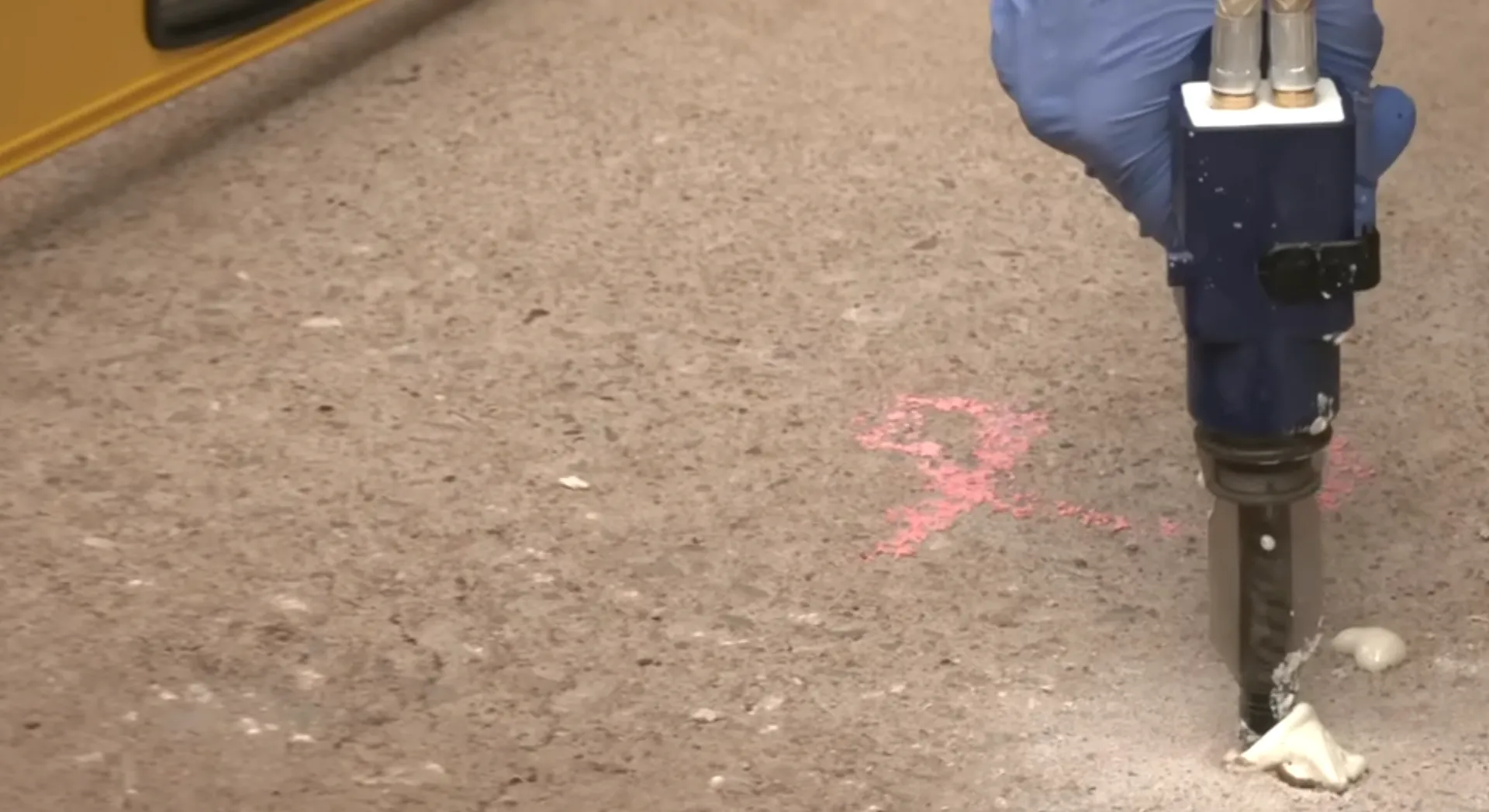
Access holes produced by this process are dime size. As compared to those produced by mud jacking, they are significantly smaller. The curing time for foam is typically about 15 minutes; therefore, most customers may walk or drive on their surface(s) the same day after completion of the process.
Foam is also light weight and water proof. Therefore, when cured, there will be virtually no additional load added to the soil beneath the slab, it cannot be washed away, nor does it ever deteriorate or break-down from moisture. Additionally, the uplift provided by foam remains in place.
15 min
Foam cure time
Dime
Hole size
Same day
Usable after lift
Why Choose Polyjacking?
- Fastest cure time of any slab lifting method
- Smaller, less visible holes than mudjacking
- Lightweight, adds no stress to the soil below
- Waterproof, resists erosion under the slab
- A good fit near foundations and structures
- Far less than full concrete replacement
Polyjacking vs. Mudjacking: Which Is Right for You?
Both approaches raise settled concrete. The right one depends on the job, your timeline, and what you want to spend. We help you sort it out during the on-site visit.
| Factor | Polyjacking (Foam) | Mudjacking (Slurry) |
|---|---|---|
| Cure / wait time | ~15 minutes; same-day use | 24 to 48 hours to drive on |
| Access hole size | Nickel-sized (~5/8") | 1 to 2 inch diameter |
| Material weight | Very light; no added soil stress | Heavy; dense slurry fill |
| Water resistance | Waterproof; will not wash away | Can erode if drainage unresolved |
How a Polyjacking Job Works
-
1
Assessment
You will accompany us as we walk the area where the slab has settled. Then we'll take measurements to determine how much the slab fell. From those measurements we will mark hole locations that provide an even distribution of foam across the area of settlement.
-
2
Drill Access Holes
We use a small diamond bit to make a series of holes in the slab, which are about dime size. These access holes are significantly smaller than mud jack openings and almost disappear after they're patched.
-
3
Foam Injection and Lift
Foam is injected into the holes, this 2 part foam reacts and expands under the slab lifting it back to its original position. We watch the slab lift until it reaches the correct height at which point we stop the application. Each segment of the slab takes minutes to complete.
-
4
Curing (15 Minutes)
It usually takes about 15 minutes for the foam to cure. So there's no waiting around or having your driveway closed all night.
-
5
Hole Patching and Cleanup
After curing we fill each hole with a concrete repair mix and then do our final clean up. In many cases by the time we have finished cleaning up and packing our equipment the surface is already ready for you to drive on again.
Where Polyjacking Works Best
Polyjacking is best for situations where speed of operation, precision in application, or high sensitivity to weight are important factors.
Garage Floors and Slabs Near Foundations
The lightweight nature of the foam will add no additional stress to the soil adjacent to your home making this a preferred choice as opposed to heavier denser slurry when applying techniques at the foundation level.
Stoops and Entry Steps
Carefully controlled lifting is necessary when front steps pull away from the dwelling. Fine control over lift can be achieved through foam injection.
Pool Decks and Tight Areas
Small hole size and compact equipment allow for ease of access into tighter areas surrounding pool decks, landscaping/patios etc.
Time-Sensitive Driveways
Foam is the fastest method available if you need to open your driveway immediately. Cure times are very quick allowing for no overnight closure and/or rearrangement of vehicles.
Decorative Patios and Wet Areas
In decorative concrete the small hole sizes result in smaller patching requirements; and since the foam is water proof it performs well in wet areas where the root cause of poor drainage cannot be completely resolved.
Polyjacking Questions
Do Polyjack lifts last?
Once hardened (cured), this foam will not dissolve, disintegrate, or be washed away. The length of time that a lift lasts depends on if the initial cause of settlement has been corrected. If there continues to be an erosion issue of the soil beneath the slab due to poor drainage it will continue to pull everything downward. During the inspection process we identify potential drainage problems.
Are patched holes visible when finished?
The hole diameter for each shot is very small. They have to be filled. There may be a slight color variation, particularly noticeable on new concrete. This is purely aesthetic and will eventually blend together as the concrete ages.
How does polyjacking compare to replacement cost?
Polyjacking is significantly less expensive than a total replacement. Total replacement includes demolition, removal, forming, pour & cure, whereas polyjacking eliminates all those steps.
Does the foam work in cold weather?
In terms of temperature, polyurethane works much better in cold temperatures compared to mudjacking's cement slurry. The cement slurry has to have the soil warm enough for curing. However, very cold ground can impact how well the foam expands.
Can you lift any concrete with foam?
You cannot lift all concrete. The slab must be solid. In other words, if the concrete is very badly cracked and separated into multiple sections that are able to move independently of one another, then neither foam or cement slurry will be able to provide a flat surface. During our estimate we view your slabs and let you know whether or not lifting is the correct method.
Get a Free Polyjacking Estimate in Eagle Mountain
We come out and give you a free estimate. No obligation, no pressure.
Explore our other concrete leveling services: